How to Start and Operate a Beverage Distribution Company in India: Complete B2B Operational Blueprint
India's commercial beverage market is one of the fastest-growing consumer sectors in the world, expanding at over 14% annually driven by packaged drinking water, carbonated soft drinks, fruit juices, and functional energy beverages. For aspiring business owners and entrepreneurs searching for what is needed as a business owner to operate a soft beverage distribution company, the beverage distribution model offers dependable daily cash flow, recurring consumption, and high scalability.
However, running a profitable distribution business requires far more than buying crates and hoping stores purchase them. Beverage distribution is a physical logistics game where route density, inventory rotation, working capital cycles, and margin stacking determine whether you earn 3% or 18% net margins. This comprehensive operational blueprint details the exact licenses required, how to run a profitable lean distribution setup with a 3-member team, route mapping strategies, middleman profit maximization, and how to scale from 1,000 to 100,000 bottles daily.
1. What Is Needed as a Business Owner to Operate a Soft Beverage Distribution Company?
Before moving a single case of beverage stock, establish your statutory, logistical, and commercial infrastructure:
A. Statutory & Regulatory Licensing
- FSSAI State Wholesale License: Mandatory under the Food Safety and Standards Act for storing and distributing packaged food and beverages.
- GST Registration: Mandatory for inter-state procurement and issuing GST-compliant tax invoices to corporate offices, supermarkets, and registered retailers.
- Shop & Establishment Trade License: Issued by your local municipal corporation (e.g., MCGM in Mumbai) for commercial office and warehouse premises.
- Commercial Motor Vehicle Permits: Proper commercial vehicle registration (yellow number plate), fitness certificate, insurance, and national/state transport permits for your delivery fleet.
B. Physical Warehouse & Storage Infrastructure
- Warehouse Footprint: 800 to 2,000 square feet of ground-floor warehouse space with direct truck access for roll-on/roll-off loading.
- Flooring & Stacking: Heavy-duty, level concrete flooring capable of supporting liquid weight (beverage crates exert 1,000+ kg per pallet). Heavy-duty slotted angle pallet racks or wooden/plastic pallets to keep cartons off bare floors (mandatory under FSSAI hygiene standards).
- Material Handling Equipment: A manual hydraulic pallet truck (2.5-ton rating), two-wheeled sack barrows/hand trucks for crates, and secure loading ramps.
- Working Capital Requirement: Initial working capital of ₹8 Lakhs to ₹15 Lakhs to cover opening inventory stock from superstockists, vehicle deposit/lease, returnable empty crate deposits, and a 15-day rolling customer credit buffer.
2. The High-Efficiency 3-Member Team Operating Model
One of the most practical queries from startup entrepreneurs is: "How to run a small business beverage distribution setup with 3 team members?" A lean 3-person team can successfully handle 100 to 150 retail drops per day, moving 1,500 to 3,000 bottles daily without burning out employees.
| Team Member Role | Primary Core Responsibilities | KPIs & Performance Targets |
|---|---|---|
| Member 1: Route Delivery Specialist (Driver) | Operates commercial delivery vehicle (Tata Ace / Mahindra Bolero Maxi Truck). Safely transports loaded crates, unloads orders directly into retailer backrooms/pantry storage, and inspects vehicle fluid levels and tires daily. | On-time drop completion (>96%), zero transit leakage/breakage, and maintenance of clean vehicle cargo bay. |
| Member 2: Route Salesperson & Merchandiser (Frontline) | Travels with the delivery vehicle. Takes daily refill orders from kiranas, restaurants, and cafes. Collects cash/UPI payments, manages empty glass bottle and plastic crate exchanges, and sets up high-impact point-of-sale shelf displays. | Daily order book volume, new retail outlet onboarding (3–5 new shops/week), and zero crate return shortages. |
| Member 3: Operations, Dispatch & Accounts Manager (Base Hub) | Stationed at the warehouse. Manages primary purchase orders with superstockists and bottling plants. Organizes route manifest dispatch sheets, generates GST invoices, tracks digital payments, and coordinates emergency same-day customer deliveries. | Stock reconciliation accuracy (100%), supplier payment alignment, credit aging under 15 days, and phone/WhatsApp client response time (<3 mins). |
3. Building a Beverage Distribution Network Step-by-Step
To scale from zero to hundreds of active commercial accounts, execute this phased route-to-market plan:
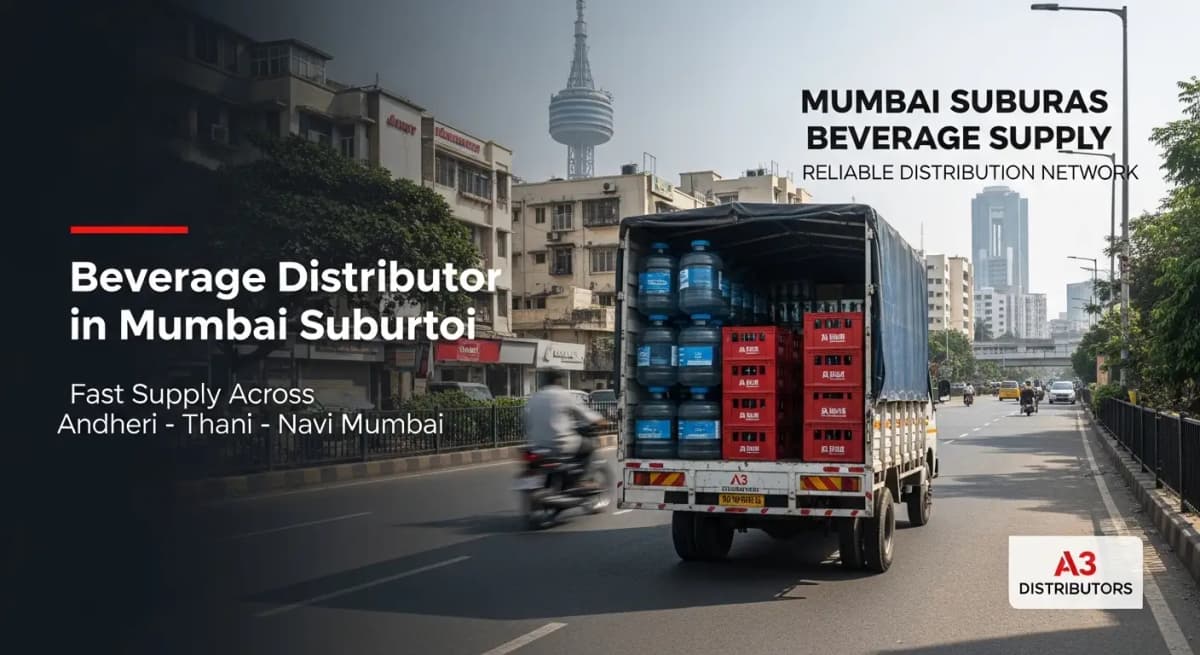
- Phase 1: Geographic Beat Mapping: Divide your target city zone into 4 or 6 fixed geographic clusters ("beats"). For example, Route A (Bandra/Khar) on Monday & Thursday; Route B (Andheri/Juhu) on Tuesday & Friday; Route C (BKC/Kurla) on Wednesday & Saturday. Fixed beats train shopkeepers to expect your delivery vehicle at the exact same hour every week.
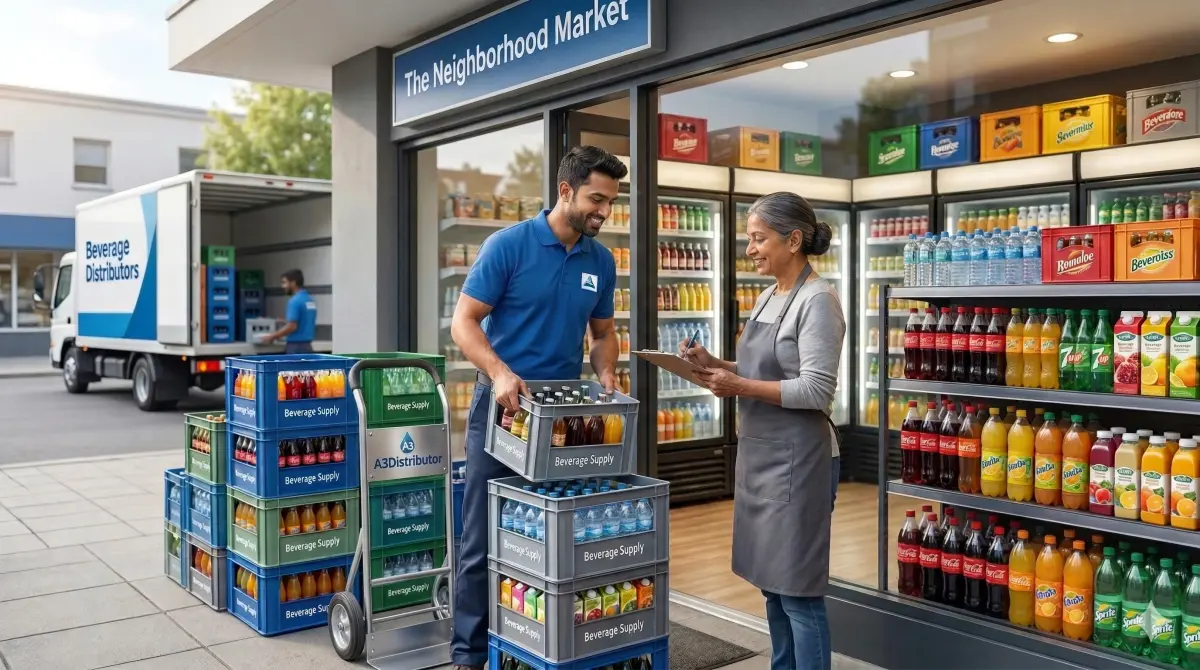
- Phase 2: Independent Cafe & Restaurant Acquisition Strategy: Standalone cafes, bakeries, pizzerias, and fast-casual restaurants are goldmines for beverage distributors. Pitch them a "Single Supplier, Full Bar" solution: instead of receiving 4 separate deliveries from distinct suppliers for water, sodas, tonics, and juices, A3 Distributors delivers all 500+ SKUs on one combined invoice with same-day emergency dispatch.
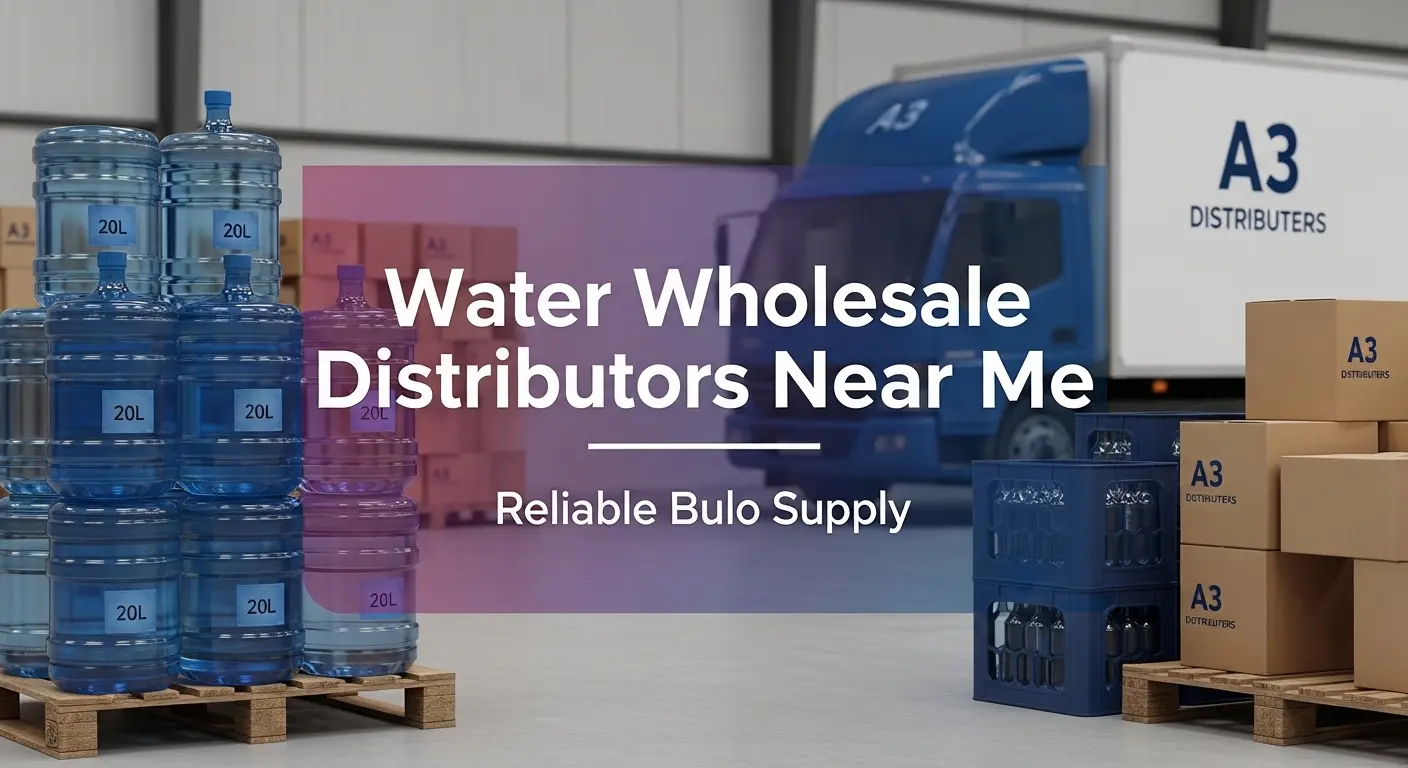
- Phase 3: High-Volume Institutional Corporate Accounts: Secure enterprise corporate offices, bank branches, and co-working spaces for weekly standing deliveries of 20-liter jars and meeting room bottled water. Corporate accounts provide predictable, year-round volume that buffers against seasonal retail fluctuations.
4. Ways to Maximize Profit as a Middleman in Beverage Distribution
The secret to compounding profitability in beverage distribution is avoiding the trap of single-product commodity selling. Apply these four margin-multiplying tactics:
- 1. Product Margin Stacking:
- High-velocity packaged drinking water (Bisleri, Kinley, Campa) generates low gross margins (4% to 8%), but pays your daily warehouse rent and vehicle fuel.
- Stack your delivery truck with high-margin impulse beverages: craft non-alcoholic IPAs (25%–35%), imported tonic waters and ginger ales (20%–28%), energy drinks like Red Bull and Sting (16%–22%), and specialty juices.
- When your delivery team drops 10 jars of water at an office or restaurant, also upsell 2 crates of club soda and 1 crate of energy drinks. The incremental transport cost is zero, but your trip profit triples.
- 2. Route Drop Density Maximization:
- Fuel and vehicle amortisation are your highest variable costs. If your truck drives 25 km to deliver to 5 scattered shops, transport cost per crate is ₹15+.
- By concentrating 30 to 45 delivery drops within a dense 2-kilometer radius, your transport cost drops to under ₹3.50 per crate. Refuse unprofitable outlier deliveries outside your established core beat.
- 3. Primary Volume Schemes & Quarterly Kickbacks:
- FMCG beverage manufacturers reward volume. Superstockists and direct distributors earn 2% to 4% backend turnover rebates when quarterly targets are achieved. Ensure your warehouse rotates inventory fast enough (inventory turnaround <10 days) to hit maximum scheme slabs.
- 4. Strict Returnable Crate & Deposit Asset Control:
- Glass bottle crates require deposit fees (typically ₹100 to ₹150 per plastic crate). Poorly trained delivery staff often leave empty crates behind or fail to collect empties from busy retailers, causing silent capital leakage of ₹20,000+ monthly. Implement strict 1-for-1 crate exchange dockets signed by the shopkeeper.
5. Scaling from 1,000 to 100,000 Bottles Daily
When scaling toward mega-distributor status (moving 100,000+ units daily):
- Adopt Route Optimization & Dispatch Software: Transition from manual paper dockets to mobile route apps with GPS geofencing, digital signatures, and instant UPI barcode generation.
- Hub-and-Spoke Cross-Docking: Establish a primary central mother depot near industrial transit corridors (e.g., Bhiwandi or Chembur) and feed smaller urban micro-depots across Western and Central Mumbai.
- Direct Manufacturer Allocation: Move from buying through secondary wholesalers to direct bottling plant depot allocations, capturing an extra 4% to 6% in primary trade discounts.
6. Partner with A3 Distributors: Mumbai's Premier Beverage Superstockist
Starting or expanding a beverage distribution network in Mumbai, Thane, or Navi Mumbai is significantly easier when you partner with an established, authorized superstockist. A3 Distributors provides new and existing beverage operators with:
- Immediate Access to 500+ Top SKUs: Bisleri, Coca-Cola, PepsiCo, Campa Sure, Schweppes, Parle Agro, Red Bull, and premium mixers.
- Wholesale Tiered Pricing: Manufacturer-direct pricing that gives you the margin cushion needed to sell competitively to retailers.
- Logistical Support & Emergency Pallet Buffers: Zero out-of-stock anxiety during high-demand summer heatwaves.
Conclusion
Operating a successful beverage distribution company in India combines operational discipline, smart 3-member team execution, route density, and product margin stacking. By setting up proper licensing, servicing retail and cafe accounts with consistent delivery beats, and partnering with an established wholesale distributor, you can build a highly lucrative, recession-proof beverage enterprise.
Looking to partner with an authorized beverage superstockist or get wholesale rate cards in Mumbai? Contact A3 Distributors on WhatsApp (+91 70394 14924) or explore our Wholesale Channel Partner Portal.