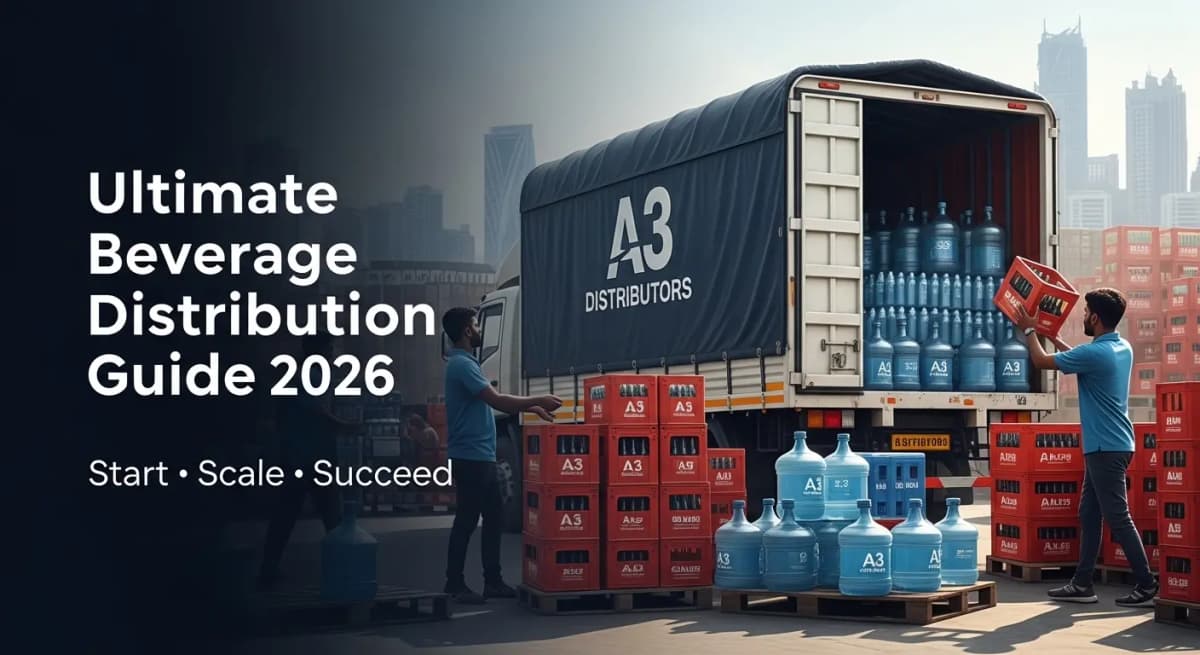
The Ultimate Beverage Distribution Business Guide for 2026
The Fast-Moving Consumer Goods (FMCG) distribution sector is one of the most resilient and potentially lucrative business models in the global economy. Within FMCG, the beverage segment—encompassing everything from packaged drinking water to energy drinks, juices, and colas—offers unique opportunities for rapid inventory turnover and massive scale. However, the barrier to entry has evolved significantly. The days of operating a successful distribution agency out of a dusty garage with a single rented truck are over.
In 2026, beverage distribution is a high-tech, capital-intensive, logistics-driven enterprise. This comprehensive Beverage Distribution Business Guide breaks down the structural requirements, financial realities, and strategic imperatives necessary to build and scale a dominant distribution company in a hyper-competitive market.
1. Capital Requirements and Financial Structure
Beverage distribution is a game of scale and cash flow management. The margins on wholesale beverages are notoriously thin (often ranging between 4% to 10% depending on the brand tier and volume). Therefore, profitability is entirely dependent on moving massive volumes efficiently.
Working Capital Intensity
The most critical financial hurdle is working capital. As a distributor, you must purchase massive bulk inventory from the manufacturers (often requiring upfront payment or very tight credit terms, like Net 7 days). However, you must extend credit to your retail and corporate clients to win their business (often Net 15 to Net 30 days). This creates a massive cash flow gap. A successful distributor must have significant cash reserves or robust bank credit lines to bridge this gap without defaulting on manufacturer payments.
Infrastructure Investment
Your initial capital must cover the trifecta of distribution infrastructure: Warehousing, Fleet, and Technology. Leasing a 10,000 sq. ft. warehouse, acquiring a fleet of commercial delivery vehicles, and purchasing an Enterprise Resource Planning (ERP) software system requires substantial upfront investment.
2. Mastering the Logistics: Route to Market (RTM)
Your Route to Market (RTM) strategy is the absolute core of your operations. It dictates how efficiently you can move a heavy, low-margin product from your warehouse to the retailer's shelf.
Warehouse Optimization
Beverages are incredibly heavy (a single pallet of water can weigh over a ton). Your warehouse must be designed for rapid loading and unloading. This requires high-grade concrete flooring, industrial forklifts, heavy-duty vertical racking, and a strict adherence to FIFO (First-In, First-Out) inventory management to prevent product expiration.
The Delivery Fleet
You cannot rely on a homogenous fleet. A modern distributor utilizes a tiered fleet structure:
- Heavy Commercial Vehicles (HCVs): Used for massive bulk drops to supermarkets, massive corporate parks, or to transfer stock from central warehouses to localized micro-hubs.
- Light Commercial Vehicles (LCVs): The workhorses of the fleet (e.g., Tata Ace). These are agile enough to navigate dense urban traffic and narrow retail lanes, making 30 to 40 drops a day.
Dynamic Route Planning
Static delivery routes are inefficient. Advanced distributors use AI-driven route optimization software that factors in real-time traffic, delivery time windows (e.g., a mall that only accepts deliveries before 10 AM), and truck load capacities to chart the most fuel-efficient and time-efficient routes daily.
3. Technology: The Great Differentiator
In 2026, technology is not just an operational tool; it is your primary competitive advantage.
The ERP Backbone
A robust ERP system is non-negotiable. It must seamlessly integrate inventory management, order processing, accounting, and CRM (Customer Relationship Management). When a sales rep takes an order on their tablet in a retail shop, that order must instantly deduct from live warehouse inventory and generate a picking list for the loading dock.
B2B E-Commerce Portals
Relying solely on sales reps making physical visits is outdated. Top distributors provide their B2B clients with customized apps or web portals. Retailers can log in at 11 PM, check live stock availability, place their orders for the next morning, and instantly download their GST invoices. This significantly reduces your operational overhead and increases customer loyalty.
Telematics and Cold Chain Tracking
Every vehicle in your fleet must be GPS tracked. Furthermore, if you distribute premium juices or dairy-based beverages, your trucks must have IoT temperature sensors. If the temperature in the cargo hold spikes, the system must immediately alert the fleet manager to prevent product spoilage.
4. Portfolio Strategy and Brand Relationships
A distributor's power is derived entirely from the brands they represent.
The Anchor Brands vs. The Challenger Brands
You must secure distribution rights for an "Anchor Brand" (e.g., Bisleri, Coca-Cola, Red Bull). These are high-volume, low-margin products that guarantee your trucks are full and give you immediate entry into every retail shop. Once you have the retailer's trust, you can leverage that relationship to push "Challenger Brands" (e.g., a new local kombucha or premium mixer). Challenger brands move slower but offer vastly superior percentage margins.
Consultative Selling
Your sales representatives must evolve from "order takers" to "retail consultants." They should not just ask the retailer what they want; they should analyze the retailer's cooler planogram, highlight out-of-stock issues, and recommend high-margin SKUs tailored to that specific neighborhood's demographic.
Conclusion: The Future of Distribution
The beverage distribution business is brutally unforgiving to inefficiency but massively rewarding to operational excellence. It requires a relentless focus on reducing the cost-per-drop, maximizing vehicle utilization, and leveraging technology to minimize administrative bloat.
At A3 Distributors, we have spent years refining this exact model to become a market leader in Mumbai. We continuously invest in our fleet, our software backend, and our team training to ensure we provide unmatched service to our retail and corporate partners. The future of FMCG distribution belongs to the technologically integrated, logistically superior operators.